PTSD Update: Making the Most of the Rest of Summer

PTSD Treatment Works
National Center for PTSD

Making the Most of the Rest of Summer

There’s still time to enjoy what summer has to offer. Longer days, warmer weather, family gatherings, vacations, and time outdoors can create opportunities to recharge – and they can also disrupt routines or bring new sources of stress.

Whether or not you have PTSD, finding healthy ways to cope with stress can help you enjoy summer activities. And taking care of your mental health doesn’t have to mean making big changes. Small, intentional actions each day can make a meaningful difference in your overall well-being.

As you enjoy the remaining weeks of summer, consider making time to:

  • Get outside, even for a short walk.
  • Stay connected with friends, family, or fellow Veterans.
  • Prioritize sleep and maintain a consistent routine when possible.
  • Practice a relaxation technique, such as deep breathing or mindfulness.
  • Take breaks from the constant stream of news and social media.

Everyone experiences stress differently, and there’s no one-size-fits-all approach to coping. The important thing is finding healthy strategies that work for you and practicing them often.

Whether you’re managing everyday stress or recovering from trauma, the National Center for PTSD offers practical resources to support your mental well-being.

Explore self-help and coping resources: https://www.ptsd.va.gov/gethelp/selfhelp_coping.asp

PTSD Research

Mobile Apps: On-demand Tools to Manage Stress

Are you feeling stressed and trying to manage PTSD symptoms? There’s an app for that! Research shows that PTSD Coach is user-friendly and helpful. And keeping apps valuable for users requires occasional updates. The team that designs PTSD Coach turns to research to match those updates to user needs. A new version of PTSD Coach is now available and was guided by results from a study of 67 Veterans and 95 civilians.

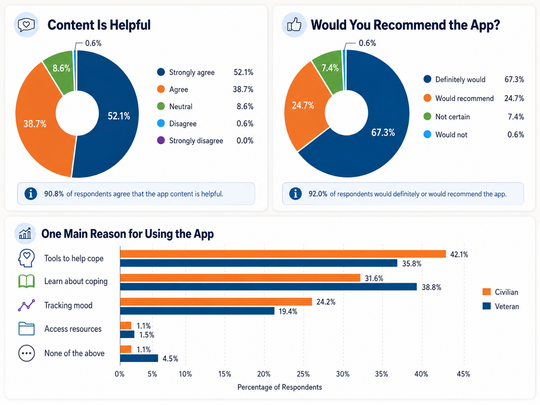
All study participants were already using PTSD Coach and answered a short survey about how easy it was to use and if they would recommend the app to others. They also reported how they learned about the app and which sections of the app were most important to them. Most (8 out of 10, or 80%) of participants reported a PTSD diagnosis. Overall, participants found the app:

  • Helpful (9 out of 10, or 90%), with the main reason for use being to manage symptoms or learn about coping
  • Easy to use, with almost all saying they would recommend the app to others

Although VA created PTSD Coach with Veterans in mind, it is available to everyone. Getting treatment is the best way to recover from PTSD. Tools like PTSD Coach can help manage symptoms before, during and after treatment.

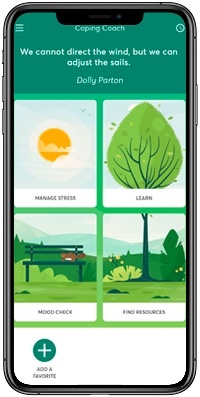
Looking for other tools to support your well-being? Check out the new Coping Coach app—it’s for anyone who wants to practice skills to manage stress. And if you’ve been through a traumatic event, PTSD Coach can help you track and manage your symptoms. Both are free and available in Google Play and iTunes stores.

Read the article by National Center for PTSD researchers and apps development team: https://www.ptsd.va.gov/professional/articles/article-pdf/id1650576.pdf

mobile app chart
Read the article by National Center for PTSD researchers and apps development team:

Read More

Featured App: Coping Coach

Looking for a simple way to manage everyday stress and build healthy coping skills?

Coping Coach Coping Coach is a free mobile app from VA’s National Center for PTSD designed to help anyone practice self-care, manage stress, and improve overall well-being. Whether you’re feeling overwhelmed, adjusting to life’s challenges, or simply looking to build healthier habits, the app offers practical tools you can use anytime.

With Coping Coach, you can:

  • Practice coping skills for stressful moments
  • Build healthy routines through personalized goals
  • Track your progress over time
  • Learn strategies to support your mental well-being

The app is free to download for both iOS and Android devices.

Learn More

Produced by VA’s National Center for PTSD – Executive Division

*Links will take you to a non-government site. VA does not endorse and is not responsible for the content of these linked websites.

Veterans Administration logo

Veterans Health Administration · 810 Vermont Avenue, NW · Washington, DC 20420 · 877-222-VETS (877-222-8387)


How can you help?
Learn about what to say…


Crisis Help Call 988
800-523-3333
Text “MN’ to 751741
Calls in East Central Minnesota are routed to local mobile or local phone help.
Click here for additional information
In a life threatening situation or medical emergency, call your doctor or 911.


Just need to talk?
Wellness in the Woods 5:pm – 9:am Daily 844-739-6369
Minnesota NAMI Warmline 4:pm – 8:pm Thur – Sun 888-334-7754
Mental Health Advocacy Minnesota Warmline 5:pm-10:pm Mon – Sat 877-404-3190

Posted in News & Events.